Bangkok Street Food Prices: What a Full Day of Eating Actually Costs
Produced with AI assistance. Reviewed by Equipe PaceRoam. · Updated November 7, 2026
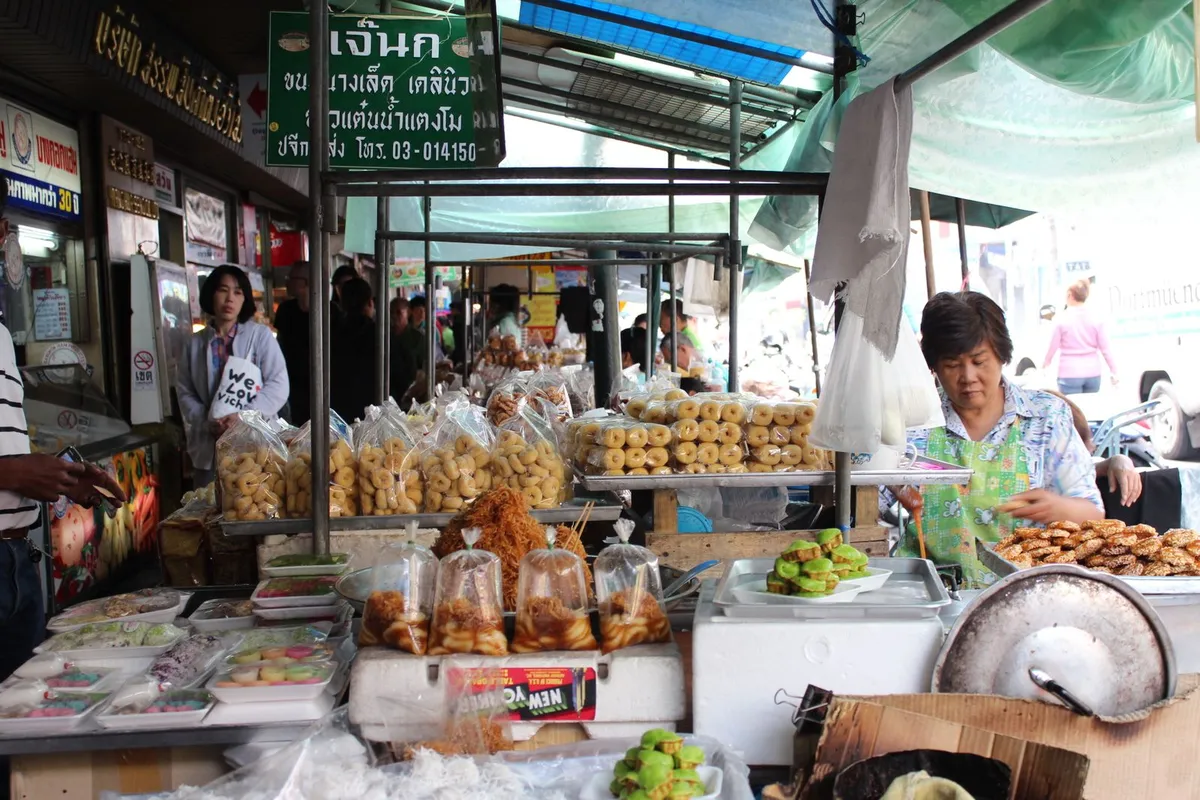
A full day of street food in Bangkok runs ฿150 to 400 -- roughly USD 4 to 12 at the 2026 exchange rate of about ฿33 to the dollar -- if you stick to neighborhood stalls and skip the tourist strips. That number comes straight from Bangkok's 2026 street food price surveys, and it is the single most useful figure for budgeting a trip. The gap between a local stall and a tourist-facing cart for the exact same dish can be double the price, so knowing where that line falls matters more than knowing which dish to order.
The daily budget, dish by dish
Breakfast, lunch, dinner and a dessert at neighborhood stalls add up to that ฿150-400 range. A pad thai anchors most meals at ฿45-60 away from tourist zones; the same dish on Khao San Road or in central Sukhumvit runs ฿100-150, double or more for an identical recipe. Boat noodles are the cheapest single item on the list: ฿15-25 per small bowl at the Boat Noodle Alley near Victory Monument, where the point is to order several tiny bowls in a row rather than one large plate. Grilled pork skewers (moo ping) cost ฿10-15 each, khao man gai (chicken and rice) runs ฿40-60, and a plate of pad krapao or curry over rice averages ฿50-80 outside tourist areas.
The one exception: Jay Fai's Michelin-starred pad thai
Skip the budget math entirely for Jay Fai, on Maha Chai Road, where a Michelin star pushed pad thai prices to ฿800-1,500 a portion. It is worth knowing about as a curiosity, not as a budgeting reference. A few doors down on the same street, Thipsamai -- open since the 1960s -- sells its signature egg-wrapped pad thai with orange juice on the side for a more reasonable ฿100-150, though the queue can run past 40 minutes around 7pm.
Dessert math: mango season changes the price
Mango sticky rice (khao niao mamuang) is the clearest example of seasonal pricing on this list. At neighborhood stalls during mango season, roughly March through June, when nam dok mai mangoes are at peak sweetness, it costs ฿50-70. Outside that window the same dessert at a quality stall runs ฿80-120, and tourist-area versions can reach ฿150-180 -- triple the in-season neighborhood price for the same bowl.
Where the tourist markup actually happens
The markup is geographic, not quality-based. Walking two streets west from Khao San Road to Phra Athit, or south to Tanao, roughly halves the price of the same dish, according to the price guide published by outthailand.com in July 2026. The broader Thailand Price Index from August 2026, compiled by destinationthailand.io, puts the local benchmark at ฿50-80 per plate; anything over ฿100 for a pad thai is a signal you're paying for an English menu and a view, not better cooking.
Neighborhood by neighborhood: where the prices actually hold
Chinatown (Yaowarat) has the highest concentration of good, cheap stalls outside the tourist circuit, with prices near the bottom of the range -- 40-80 baht a plate. Victory Monument, beyond the Boat Noodle Alley, has dozens of lunch stalls aimed at local office workers, where pad krapao runs 50 baht or less. Central Sukhumvit mixes neighborhood stalls with tourist-facing versions on the same block, so it is worth checking whether the menu is in Thai or already translated before ordering. Tourists who want to compare prices before ordering can simply walk past two or three stalls selling the same dish — on a typical Bangkok street the asking price swings by ten to twenty baht between vendors standing within sight of each other, and the stall with the longest line of local customers, not tourists, is usually the reliable signal for both quality and fair pricing.
Is it worth paying the tourist price?
For a short visit, ฿300-400 a day covers three full meals plus a dessert at local stalls, with room to repeat the mango sticky rice if the timing lines up with the March-June season. The two extra streets of walking from Khao San Road buy nothing but convenience -- the food itself doesn't improve, only the price does.