
Ho Chi Minh City on a Tight Budget: War Sites, Markets, and the Real Daily Cost
Updated November 7, 2026
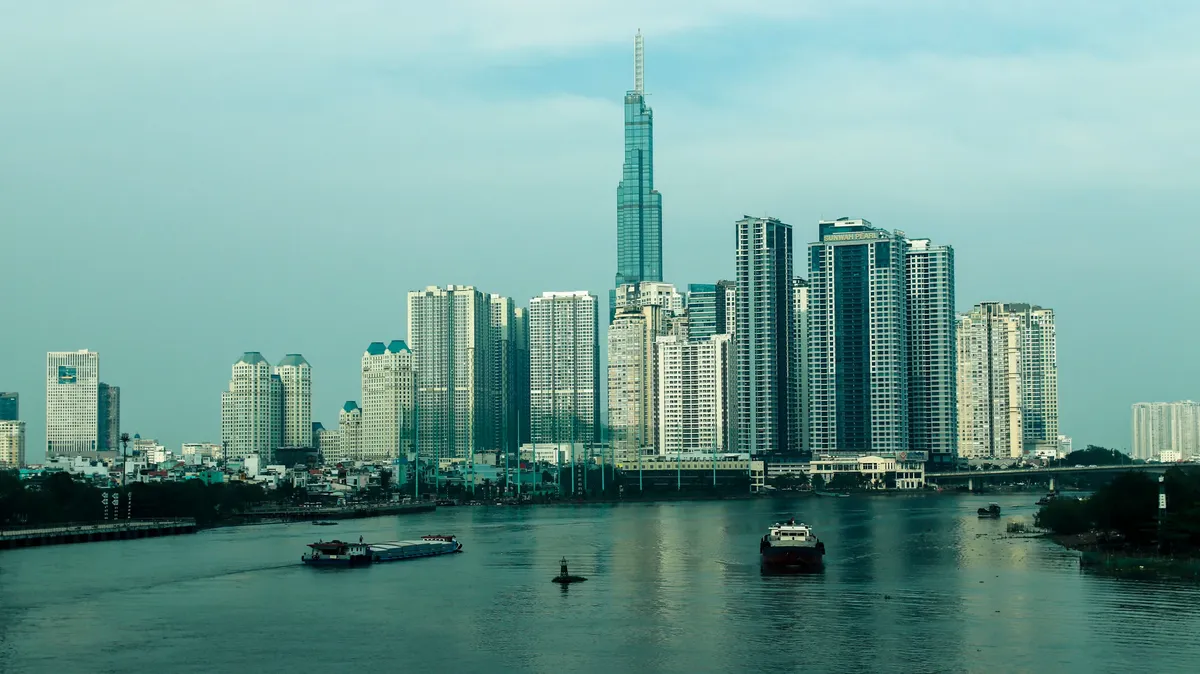
Saigon, not Hanoi, is where Vietnam’s war history gets physical: tanks parked in a museum courtyard, a presidential bunker you can walk into, and tunnels you can still crawl through. Locals barely use the name Ho Chi Minh City at all — it’s hotter, faster and more vertical than the capital, with the Saigon River slicing through downtown and the Landmark 81 tower lighting up the skyline after dark. Budget-wise nothing really changes from Hanoi: street food runs 20,000–50,000 VND (US$0.80–$2.00 at October 2026 rates, 1 USD ≈ 25,000 VND) and most of the history sits behind admission under US$2.
A war-history morning for under two dollars
Reunification Palace and the War Remnants Museum sit a 10-minute walk apart, and both charge the same 40,000 VND ($1.60) each (official admission). At the Palace — the building where the Vietnam War officially ended in 1975 — the basic ticket already covers the main halls and the underground bunker; only the combo with the Norodom Palace exhibit costs extra. The museum on Vo Van Tan Street deserves at least two unhurried hours: the courtyard has real tanks and aircraft, and the exhibits inside (including the Agent Orange displays) are genuinely heavy, not a stop to rush kids through. Pair both with the neighboring Notre-Dame Cathedral and the whole thing fits into one walkable morning.
Cu Chi is where the budget stretches
Unlike everything else on this list, Cu Chi can’t be done cheaply. The site entrance alone runs 110,000–135,000 VND ($4.40–$5.40) per the published entry fee, about 1.5 hours outside the city by car. The cheapest way in is a large-group tour from Ho Chi Minh City for $15–25 including transport and a guide; private or small-van options cost noticeably more. Whichever way you go, clear the whole morning — midday heat here is brutal, and the actual tunnels (widened for tourists, but still tight) are slow going if you crawl at a sane pace.
Eating without the Ben Thanh markup
Com tam and bún chả cost 40,000–80,000 VND ($1.60–$3.20) at a no-frills restaurant; a bowl of pho runs about $2 and a street banh mi about $1.20. Vietnamese coffee from a local stall (skip the chain cafés) is 10,000–20,000 VND ($0.40–$0.80). One quick filter saves you from tourist pricing: a laminated English-language menu with photos near Ben Thanh Market almost always means inflated prices — look instead for the stall with a line of locals perched on low stools, the same rule that works in Hanoi.
Skipping the Grab tab
Grab (the local Uber) is convenient but adds up fast over a full day. The public bus network covers the whole city for a flat 5,000–7,000 VND ($0.20–$0.28) per ride under 25 km — route 152 connects Tan Son Nhat Airport to downtown for 10,000 VND ($0.40), far cheaper than any ride-hail trip. Since the combined bus-and-metro pass launched, a full day of unlimited transit costs just 40,000–47,000 VND ($1.60–$1.88), worth it if your day involves more than two round trips downtown.
Flying beats the sleeper bus from Hanoi
For anyone arriving from Hanoi, the math doesn’t favor the overnight bus: that ticket costs $25–45 and eats 34–37 hours, while a VietJet budget flight booked two to three weeks ahead runs $30–60 for a 2-hour hop. The price gap is small; the time gap is over 30 hours. The Reunification Express train (30–36 hours, $40–75 depending on class) only makes sense if the journey itself — with stops in Hue or Da Nang — is part of the point.
Worth it on a tight budget?
Yes, with one caveat: Ho Chi Minh City needs a bit more planning than Hanoi, because its one big expense — Cu Chi — is close to mandatory if the Vietnam War is why you came, and it can cost more on its own than the rest of the day combined. Outside of that, museums plus street food plus public transit lands around 400,000–700,000 VND ($16–$28) per person, not counting a bed — hostel dorms run $8–12 a night. Lock in the Cu Chi day ahead of time and leave the rest loose for walking the city.