
Marrakech for Free: Jemaa el-Fnaa, Souks, and the Art of Haggling
Updated November 13, 2026
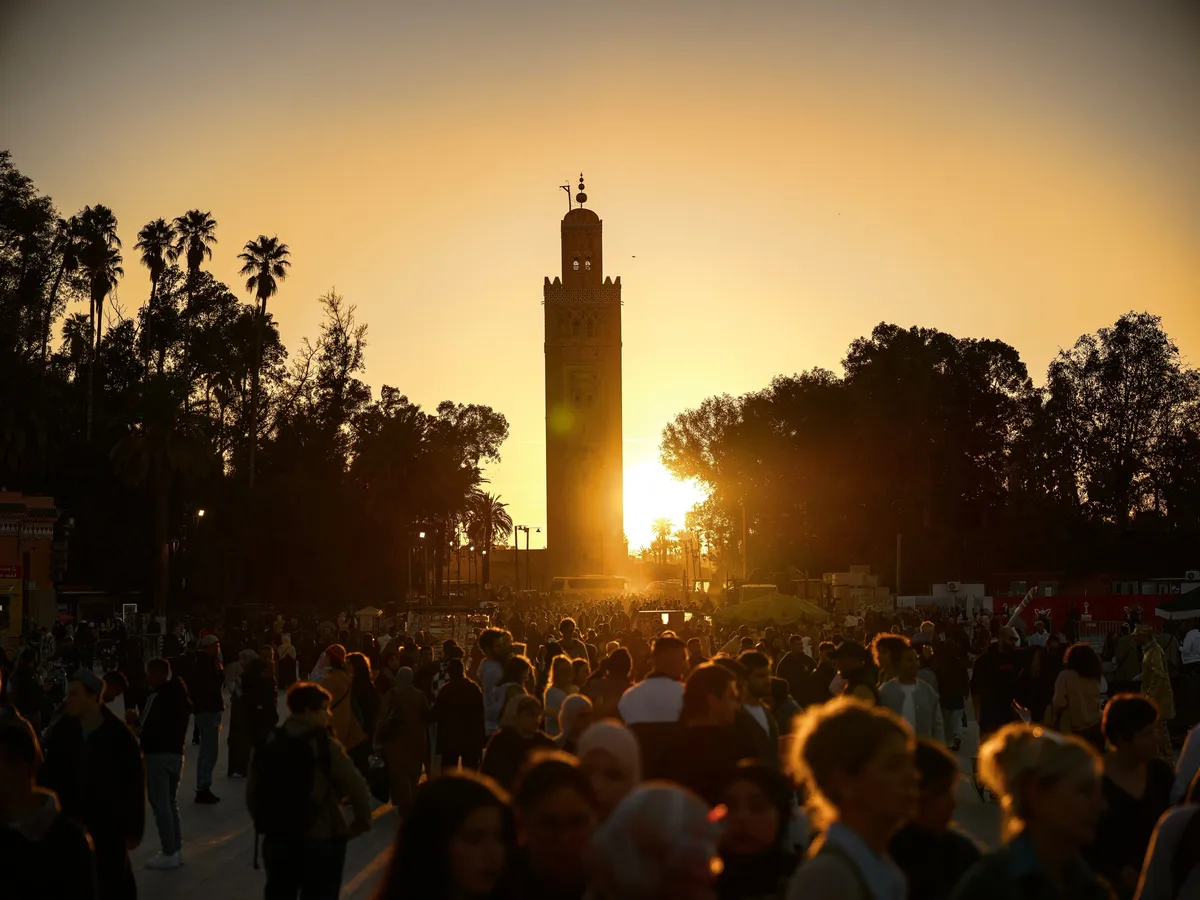
Split Marrakech in half and you get two different cities: the walled medina, a maze of souks and hidden riads, and modern Guéliz across the way. Here's the thing a tight budget actually works in your favor for — the medina's single best experience, wandering the souk alleys and watching Jemaa el-Fnaa square flip from day mode to night mode, doesn't cost a dirham.
One square, two completely different shows
By day, Jemaa el-Fnaa is orange juice carts and snake charmers working the crowd. Dusk flips a switch — food stalls materialize, storytellers pull in listeners, live music claims every corner. Walking through costs nothing; whatever you spend is entirely up to what catches your eye.
Get lost on purpose
No map of the medina's souks actually works, and that's the point — you're meant to wander. Textiles, spices, hand-hammered lanterns, leather, all down covered alleys that cost nothing to walk. The exceptions are the ticketed sights: the Bahia Palace charges an official 100 MAD (around $10) entry fee, and Ben Youssef Madrasa runs similarly, together landing in the $10-15 range — but a surprising amount of the medina's best architecture is visible for free from the street outside.
Haggling isn't optional, it's the game
Whatever price a vendor opens with in the souk, treat it as a starting position, not a real number — bargaining here is cultural practice, not rudeness. Open low, work toward the middle, and expect no exact formula; the only real trick is walking in already knowing you'll negotiate, which strips out most of the stress.
Does this work on a tight budget?
Completely — the whole medina experience, day-and-night Jemaa el-Fnaa, the souks, and most of the standout architecture viewed from outside, costs nothing. If there's one thing worth paying for and booking ahead, it's a guided souk walk — useful if you'd rather understand (and haggle) with context than wander in blind.
The most common scams (and how to avoid them)
Travelers coming back from Marrakech tend to report the same handful of scams, well documented across travel forums. The classic one is someone telling you a garden or monument is "closed today" for some invented reason (maintenance, a religious event, a study group) and offering to walk you somewhere else instead — in practice, almost nothing is actually closed outside official hours or Ramadan, so the move is simply to ignore it and head to the address yourself, checking your phone, which works normally even inside the medina. Snake and monkey charmers charge a "fee" if you photograph them, even from a distance — they notice the camera and come collect afterward, so the simplest move is not to get close in the first place. Someone offering to walk you to a tannery or a rug shop "just to look, no obligation" almost always ends in a heavy sales pitch that's hard to exit politely — a firm no upfront avoids the whole situation. In taxis, always confirm the meter is running before getting in (or agree a fixed price beforehand) and watch for the night tariff, which costs more and shows as a specific indicator light on the meter. For changing money, Hotel Ali right on Jemaa el-Fnaa and T Change in Guéliz are the spots travelers consistently point to as reliable in-city options.
At the food stalls in Jemaa el-Fnaa after dark, it's worth checking whether a price is posted on the menu board or asking upfront before ordering — some vendors charge tourists more when the order gets confirmed without agreeing on a price first.
Keep planning
Check out the full itinerary: Marrakech and Tunis: a North Africa itinerary without spending much
See also: Common scams against tourists: how to recognize and protect yourself anywhere