
Rotorua on a Tight Budget
Updated November 13, 2026
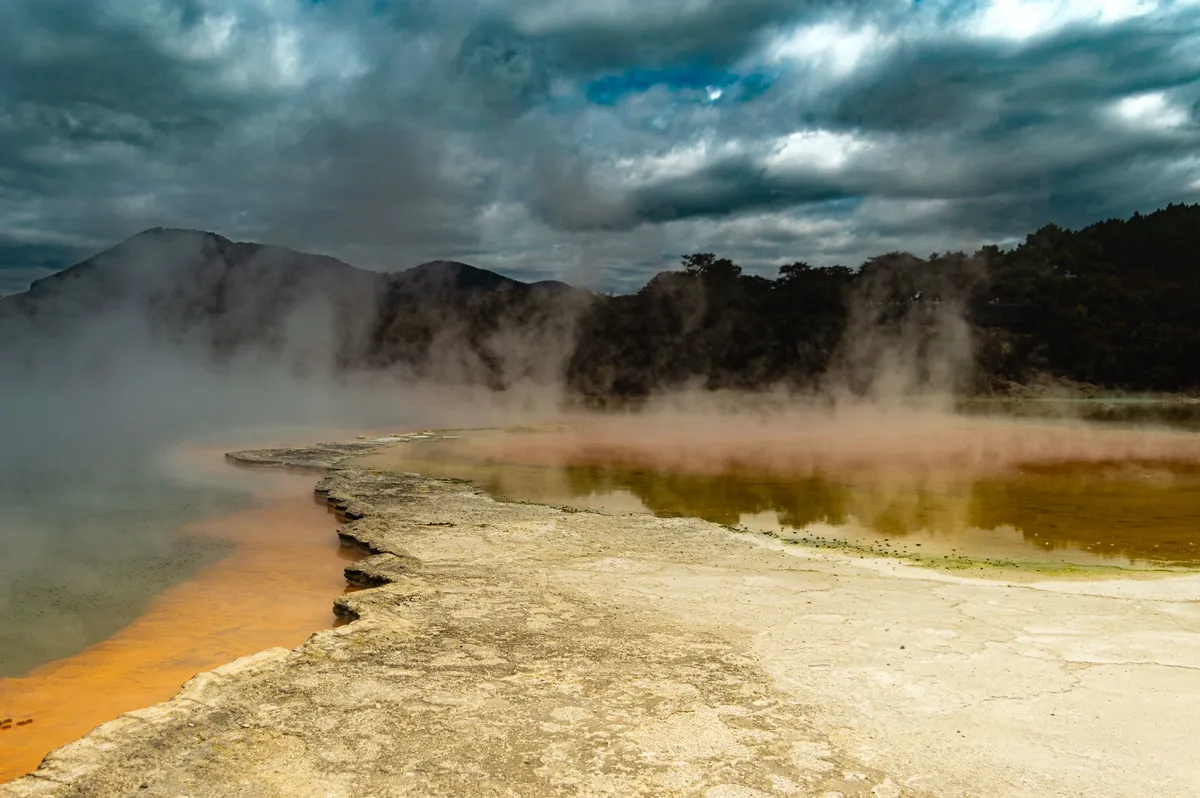
You'll smell Rotorua before you see it — sulphur drifts over the entire downtown from its geothermal springs, and it's the kind of thing nobody forgets once they've been. It's also the North Island's main window into Maori culture, with living villages like Whakarewarewa that have operated for generations on bubbling ground. The good news for anyone on a budget: plenty of the geothermal action is visible for free, just by walking the streets.
Sleeping cheap
Hostel dorms in Rotorua run NZ$28-52 a night depending on season and location, most within a short walk of the lake and downtown; private hostel rooms run NZ$115-135. Outside New Zealand's school holiday windows (April, July, September-October) prices drop noticeably — worth checking the school calendar before locking in dates.
What's worth paying for
Wai-O-Tapu Thermal Wonderland — colorful sulphur pools and the Lady Knox Geyser erupting daily around 10:15am, a time the park's own visitor page confirms — charges NZ$45 for adults and NZ$15 for kids. Te Puia, combining the Pōhutu geyser, a kiwi conservation center and a Maori carving school, runs NZ$45-75 depending on the package, still less than a nice dinner in any European capital. For the free version, walk through Ōhinemutu village on the lakeshore, where Maori meeting houses and St Faith's Church are open to see at no cost — just remember people actually live there.
A couple of practical notes
Bring clothes you don't mind soaking in sulphur smell; it's unavoidable on any geothermal outing. Many Rotorua hostels have their own thermal pools, or a deal with a local spa — a solid way to enjoy natural hot water without paying resort prices. Timing matters too: December-February bring crowds and rates 25-40% higher, so May-June and August tend to run quieter and cheaper.
Worth it on a tight budget?
Yes — Rotorua is one of the easiest places in New Zealand to balance culture and cost: hostel, simple food, and one paid geothermal attraction a day runs NZ$100-140 outside peak season, well below what the same wow-factor costs in Queenstown.
What past visitors actually recommend
Traveler accounts on forums like Reddit's r/travel and r/newzealand help sort out what's worth paying for in Rotorua. Whakarewarewa is described as a genuine "living village" — Maori residents have used the geothermal heat there to cook and bathe for over a hundred years — while Te Puia gets singled out as the more polished, professionally run cultural center of the two. One warning that comes up repeatedly: never swim in the Green Lake, since the site is tapu (sacred) to the local Maori community, and ignoring that can draw a hostile reaction from locals. Skyline Rotorua, the gondola-and-luge attraction above town, gets flagged again and again as overpriced for what it delivers — the same generic thrill-ride experience available in dozens of other cities worldwide — so cutting it from the itinerary doesn't cost the trip any of its real character.
Free hiking right in town
Whakarewarewa Forest (locally called "the Redwoods"), a five-to-ten-minute drive or an easy bus ride from downtown, is privately owned but keeps its walking trails completely free — a detail confirmed on the forest's own visitor pages. The Redwood Memorial Grove Track (2km) and the Waitawa Walk (3.4km) are both flat, well-marked loops under towering Californian redwoods, doable in under an hour with zero entry fee; only the elevated Treewalk bridges and the Zorb attraction nearby charge admission. It's one of the easiest ways to fill a free afternoon in Rotorua without adding a cent to the day's budget.
Keep planning
See the full itinerary: Complete New Zealand Itinerary: Both Islands in 15 to 18 Days on a Controlled Budget
See also: Travel Insurance: Is It Worth It, How Much Does It Cost, and How to Choose