
Tongariro Alpine Crossing: New Zealand’s Most Famous Volcanic Trail Costs Little Beyond Transport
Updated November 13, 2026
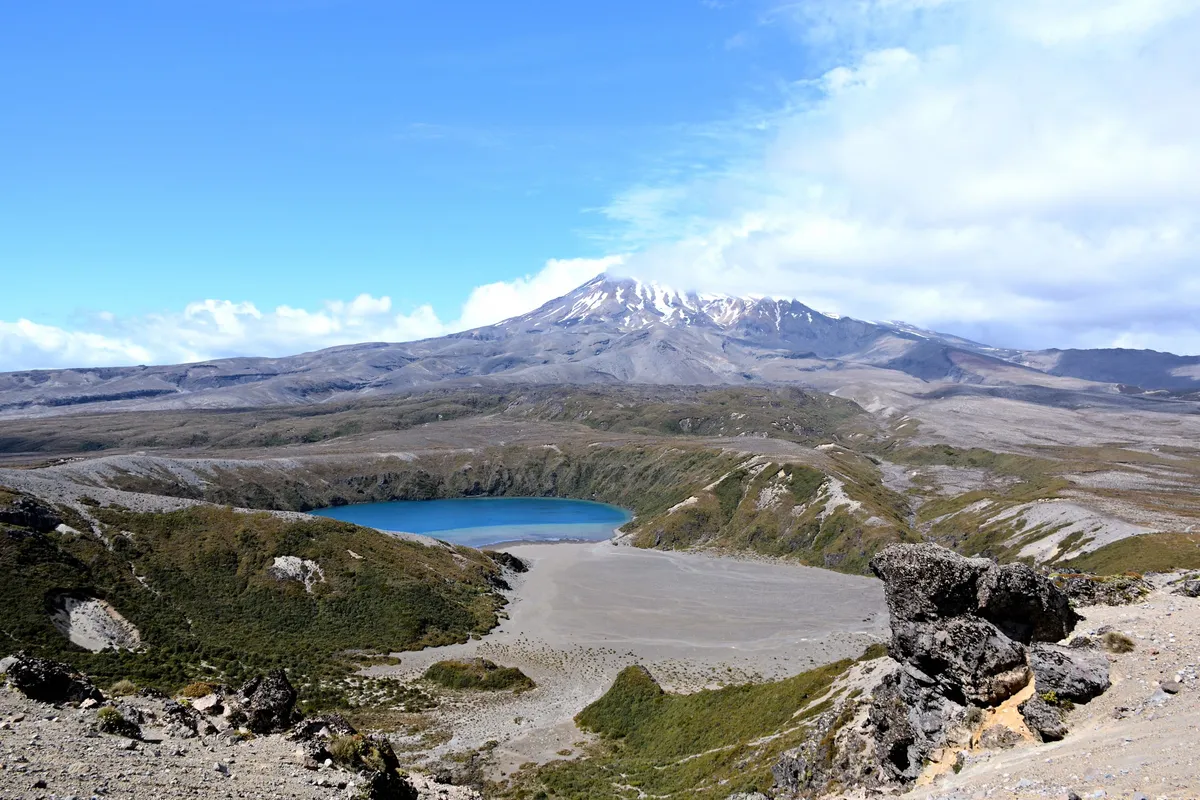
Peter Jackson's crew used this exact volcanic landscape as reference scenery for Mordor, and the trail itself is 100% free to walk — no gate fee, no paid booking for the track itself. What you can't skip is transport, because the Tongariro Alpine Crossing is a one-way trail: you finish about 25 km by road from where you started, with no way back to your car on your own.
How long, how high, how hard
The Department of Conservation's own page puts the crossing at 19.4 km one-way, Mangatepopo to Ketetahi, climbing roughly 760-765 m to its highest point, Red Crater, at 1,886 m. Most walkers take 6-9 hours including breaks; well-conditioned hikers do it in 5-6. DOC rates it intermediate-to-advanced — not athlete territory, but real fitness is required for hours of uneven terrain, steep climbs, and a final loose-gravel descent that punishes unhurried knees far less than rushed ones.
The shuttle isn't optional
Because the trail runs point-to-point and its two car parks, Mangatepopo and Ketetahi, aren't linked by a direct road, almost everyone needs a shuttle. Operators run from nearby towns — National Park Village, Turangi, Ohakune, Taupo — with staggered departures between 5:30 and 10am, returning between 1:30 and 5:30pm. Round-trip prices sit between NZD 35 and 65, and where you start from matters: National Park Village, the closest town, runs cheapest at NZD 35-45, while Turangi, a bit farther out, lands around NZD 50-65. Summer (December-February) closes the Mangatepopo car park to anyone not hiking that day, which makes booking your shuttle weeks ahead during peak season less of a suggestion and more of a necessity.
One detail that caught a lot of people off guard starting in October 2023: booking stopped being optional and became mandatory — DOC now requires everyone attempting the crossing to register in advance, part of an effort to manage visitor numbers that can hit 3,000 people a day during peak season. Worth knowing before you leave: there's essentially no cell signal for most of the route, and plenty of hiker accounts recommend downloading an offline map and telling someone your expected return time. And because the trail genuinely crosses an active volcanic zone — Mount Tongariro has recorded real eruptions — it's worth checking DOC's volcanic alert level the day before; the crossing can close overnight for that reason alone, not just bad weather. Guided options exist too: operators in National Park Village and Taupo run small-group guided crossings for hikers without alpine experience, typically bundling the shuttle, a trained guide and safety gear into one booking.
What goes in your pack
There's no shop and no food stop anywhere on the route — carry all your water (minimum 2 liters per person) and food for the day. Weather up top turns fast even in summer, so layers, a windbreaker, and sunscreen all matter, and real hiking boots make a noticeable difference on the loose gravel descent near Red Crater. Anyone without alpine hiking experience, or hiking outside the summer window (October-April), should weigh hiring a guide: the route crosses an active volcanic zone and can close without warning if conditions turn.
Worth it on a tight budget?
Easily one of the best cost-to-experience ratios anywhere in New Zealand. Beyond the NZD 35-65 shuttle, the day costs nothing you weren't already going to spend on food. Compare that to the country's other Great Walks, most of which require multi-night hut bookings, and the Tongariro Crossing delivers a genuinely unique volcanic landscape in a single day for under NZD 70 total.
Keep planning
Check out the full itinerary: New Zealand North Island Itinerary: Auckland, Rotorua, Wellington, Hobbiton, Bay of Islands and Tongariro on a Controlled Budget
See also: Travel Insurance: Is It Worth It, How Much Does It Cost, and How to Choose