Bali's Rice Terraces in the Right Light: Tegallalang vs. Jatiluwih
Produced with AI assistance. Reviewed by Equipe PaceRoam. · Updated October 27, 2026
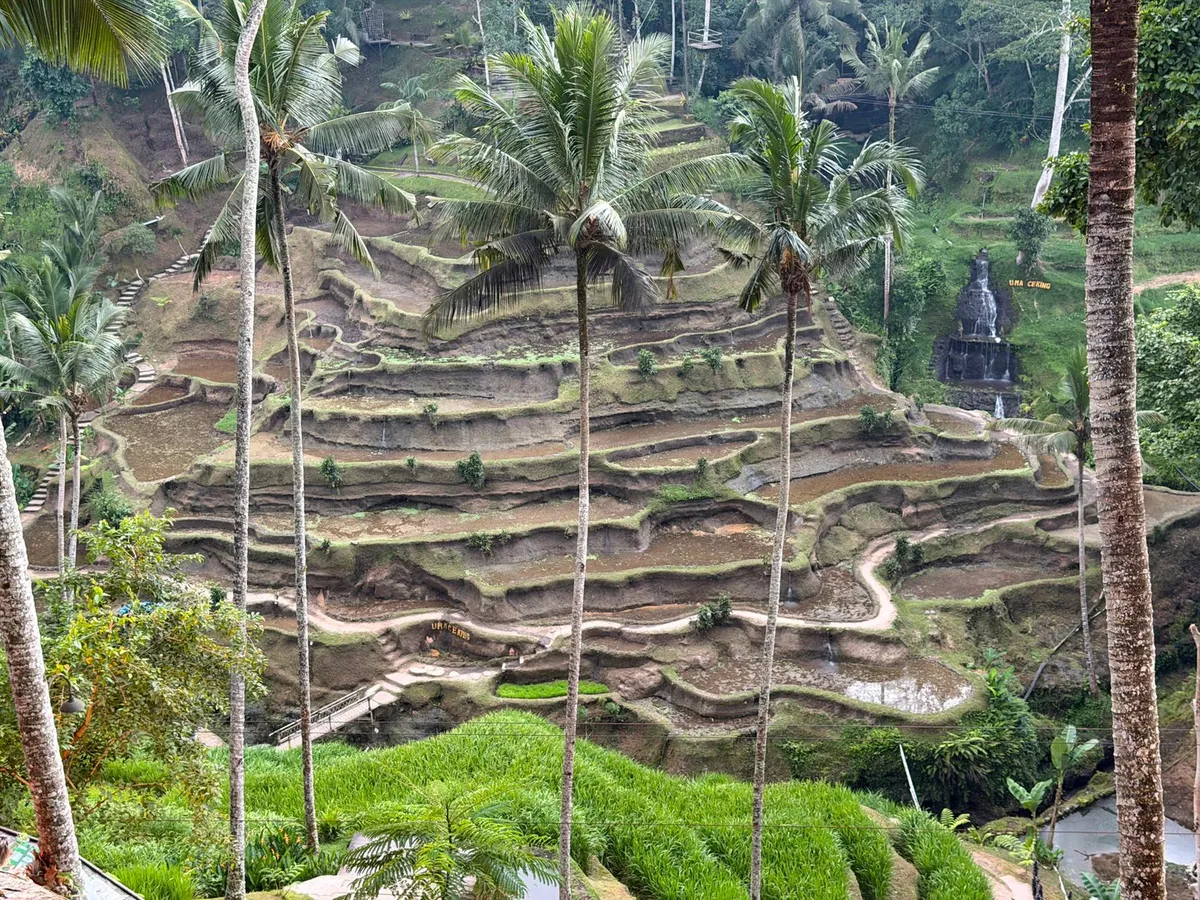
Time of day changes Bali's rice terraces more than any other variable. Between 6:00 and 8:30am the light is soft, the air is cooler, and the terraces haven't yet filled with the tour groups that arrive from around 9:00am onward. After that window, the sun turns harsh and direct, flattening the shadows that give the shot its contrast. This piece compares the island's two most photographed terraces -- Tegallalang and Jatiluwih -- on entrance cost, hours, and which season suits each one.
Entrance costs come first, because they're structured differently
Tegallalang, about 20 minutes from Ubud, has no single ticket gate. Instead, several donation booths run by local landowners line the path, charging IDR 15,000-20,000 per person; some paths or the swings made famous on Instagram add IDR 10,000-50,000 for access to specific spots. Jatiluwih, a UNESCO World Heritage site in central Bali, works differently: a fixed IDR 100,000 entrance fee per foreign visitor, collected at a checkpoint that stops every vehicle at the main entrance -- there's no driving past it without paying.
Tegallalang: the classic, crowded by mid-morning
Open daily 6:00am-6:00pm, Tegallalang is the most photographed terrace on the island precisely because it's close to Ubud and easy to combine with other stops. That convenience is also its downside: the terraces fill with visitors and swing operators by mid-morning, so the early window matters more here than anywhere else on this list.
Jatiluwih: bigger, calmer, and pricier
Open 6:00am-7:00pm, Jatiluwih costs five to six times more to enter than Tegallalang, but the terraces are larger, more spread out, and considerably less crowded. For photographers who want the terrace landscape without other people in frame, the higher fee buys that directly.
Why early morning wins at both sites
2026 guides agree on both locations: 6:00-8:30am gives the softest light, cooler air, and nearly empty dirt paths -- good for the photo and for walking without excess heat. Between 9:00am and 3:00pm, tour buses arrive and the sun gets too strong for shadow contrast. Late afternoon, roughly 3:30-5:30pm, is the second-best window, when golden hour light returns to soften the green.
Dry season versus wet season
Dry season, April through October, is the most popular time, with clear skies and dry trails -- the terraces look greenest and most photogenic between May and July, before harvest. Wet season, November through March, brings concentrated afternoon rain but also produces deeper green color and standing-water reflections in flooded fields, plus dramatic cloud cover for anyone shooting the sky as part of the composition.
A free alternative: Campuhan Ridge Walk
For green landscape photography with zero entrance cost, the Campuhan Ridge Walk in Ubud offers rolling hillside views -- not rice terraces in the strict sense, but a solid free addition to round out a shooting day.
Combining both terraces into one route
Tegallalang and Jatiluwih sit roughly an hour's drive apart, so the common route is to hit Tegallalang early, before 8:30am, then drive on to Jatiluwih and still arrive within the soft mid-morning light window. For anyone who wants a different frame than the two terraces every photographer already shoots, the Sidemen region further east offers equally green terraces with far fewer people -- though without the same access infrastructure or the organized donation booths found at Tegallalang and Jatiluwih. None of this adds real cost to the day — the swing fees and photo-prop charges at Tegallalang are optional, and skipping them entirely still leaves the core terrace view intact, since the paid platforms exist for a different kind of photo than the wide shot most visitors are after.
Is the early start and the fee worth it?
A one-day circuit covering both terraces costs IDR 15,000-20,000 at Tegallalang plus IDR 100,000 at Jatiluwih -- roughly IDR 115,000-120,000 total per person, about USD 7-8, plus transport between the two sites, which sit roughly an hour apart. Waking before 6:00am is what actually decides whether the shot comes out with soft light and an empty path or hard sun and tourists in frame -- the entrance fee itself is a rounding error compared to the effect of timing. Source: baliholidaysecrets.com, 2026 guide.