
Chiang Mai on a tight budget: temples, street markets, and the real daily cost
Updated November 13, 2026
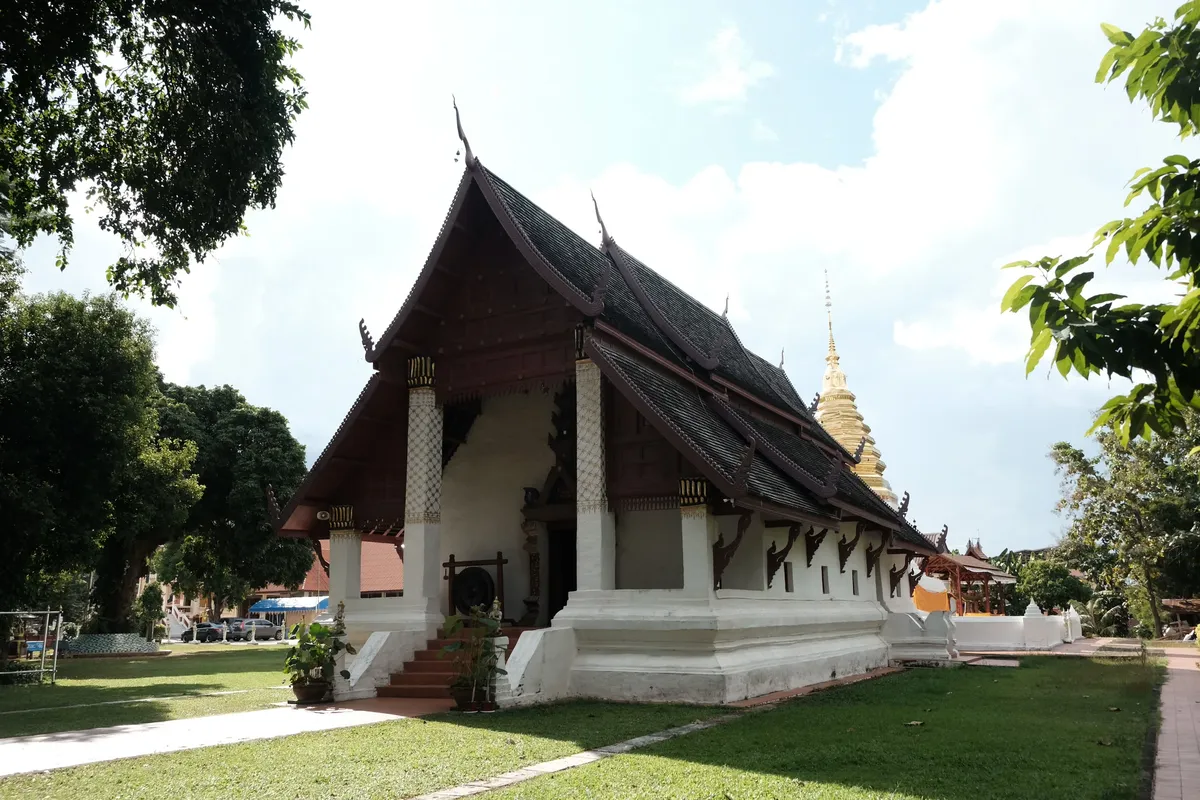
Ask any backpacker who's done both, and Bangkok tends to fade from memory the moment Chiang Mai takes over. More than 30 Buddhist temples sit inside the Old City's walled square alone, and daily costs run 40 to 60% below island destinations like Phuket. Here's what a full day of temples, street markets, and northern Thai food actually costs, cross-checked against updated local pricing.
Most Old City temples cost nothing to enter
The Old City square, still ringed by its original moat, crams most of Chiang Mai's temples into a 1.5km area — easy to cover on foot in a single day. Entry to most is free or runs on a voluntary donation.
The one temple worth the trip up the mountain
Wat Phra That Doi Suthep, the region's most-visited temple, sits on a mountaintop overlooking the entire city. Entry runs around 30 baht (~$1), a figure confirmed by dedicated guides to the temple such as Doi Suthep Tours' pricing page. Getting there means a songthaew — the shared red pickup trucks — from the North Gate area of the Old City; a round trip runs 60-100 baht per person depending on how many people split the ride. Skip booking a private car just for yourself: it costs 4 to 6 times more than sharing a songthaew.
The market that's worth planning your Sunday around
Every Sunday night, Rachadamnoen Road inside the Old City shuts to traffic and turns into a sprawling street market — handicrafts, food stalls, live music, free to walk through; you only spend on what you buy. For a quieter, less touristy version, the Saturday market on Wualai Road carries the same spirit on a smaller scale.
What it actually costs to spend a day here
- Hostel bed: 250 to 600 baht/night
- A bowl of khao soi (the north's signature dish): 40 to 60 baht
- A 1-hour massage: from 300 baht
- A day's transport by songthaew: 100 to 250 baht
- Temple entry: 0 to 30 baht
Add it up and a backpacker day in Chiang Mai lands between 700 and 1,550 baht (about $21-47) — accommodation, food, transport, and one activity included.
So, worth it on a tight budget?
Yes, consistently — Chiang Mai keeps showing up as one of Southeast Asia's cheapest spots for real temples, culture, and food without the island-resort markup. The only thing worth pre-booking is a guided trip up to Doi Suthep if you'd rather skip sorting out the songthaew system yourself; otherwise, a whole day on foot keeps costs low without any planning at all.
Where locals actually eat khao soi
Thai-language reviews on Wongnai and local food blogs converge on one point: skip khao soi on the streets inside the Old City and near the night bazaar, where the dish often runs 100 to 200-plus baht — tourist pricing. Closer to where residents actually eat, the same bowl runs 50 to 80 baht, with broth simmered fresh rather than sitting around all day waiting for customers. Two names that keep showing up on those lists: Khao Soi Mae Sai, which is Michelin-listed and still charges under 100 baht, always busy with locals rather than tourists; and Khao Soi Lung Prakit at the Kad Kom market, which still follows the old-school recipe built on Carnation condensed milk, the same version the older generation in Chiang Mai grew up on. Away from the temple trips, it's worth knowing that a shared songthaew ride within the Old City itself typically runs just 15 to 20 baht per person (up to 30 baht for farther points like the zoo) — considerably cheaper than the Doi Suthep leg, since it's a shorter, more frequently traveled route. Because routes aren't fixed, always agree on the fare with the driver before getting in.
Keep planning
Check out the full itinerary: Classic Southeast Asia: Bangkok, Chiang Mai and Hanoi on a Tight Budget
See also: How to Save Money on Food While Traveling: Street Food, Markets, and Cooking Yourself