
How to Save Money on Food While Traveling: Street Food, Markets, and Cooking Yourself
Updated November 7, 2026
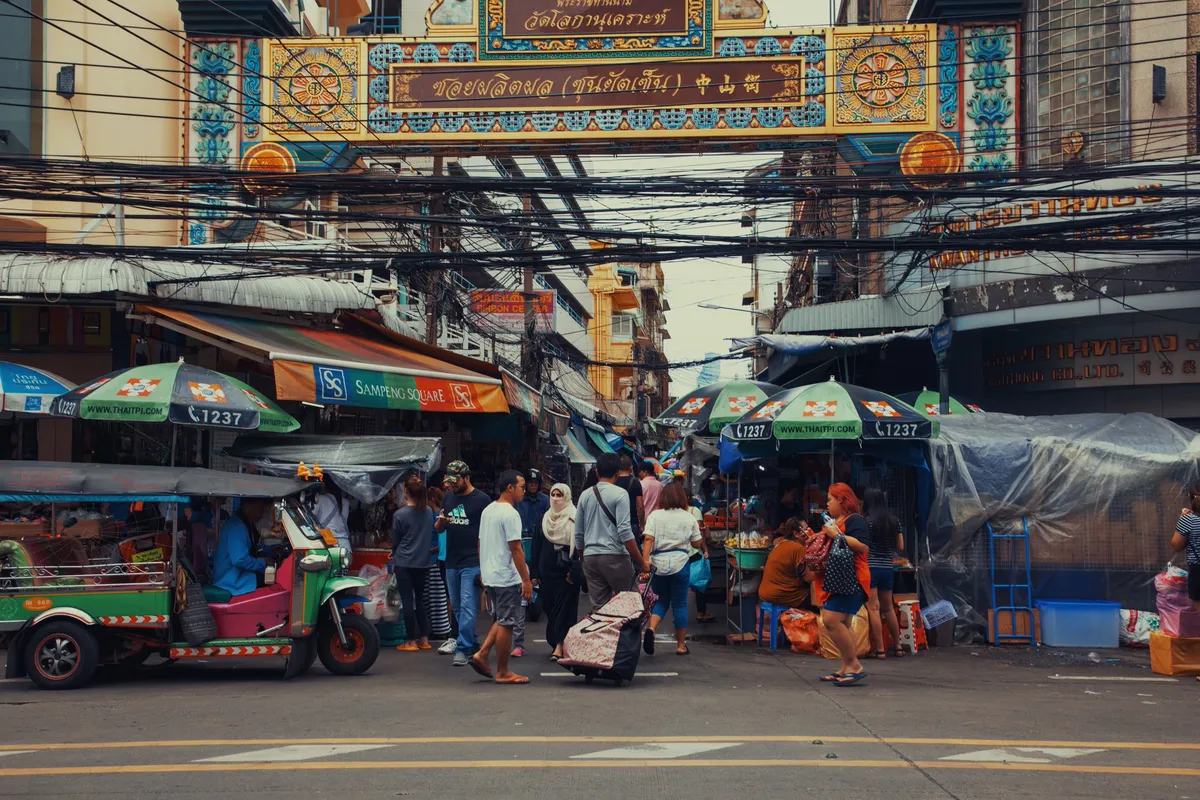
Food sneaks up on a travel budget faster than almost anything except lodging, mostly because every single meal feels small on its own — "just one more snack" — until the week's total tells a different story. The fix isn't eating badly; it's mixing three channels deliberately: street stalls, local markets, and the occasional sit-down meal.
The widest price gap in travel: street food versus tourist menus
Bangkok makes the case better than almost anywhere. A pad thai at a neighborhood stall runs 45-60 baht, while the same dish in a tourist zone climbs to 100-150 baht — nearly double for identical food, a gap confirmed by OutThailand's own Bangkok street food price survey. Brazil runs the same pattern at smaller scale: an acarajé in Salvador, a market pastel in Rio, a tapioca in Fortaleza each sit around US$1.50 — a fraction of what the same snack costs at a beachfront restaurant. The underlying rule holds everywhere: proximity to hotels and landmarks is what inflates the price, not the dish itself.
One municipal market visit pays for itself
Even travelers with zero interest in cooking benefit from walking through at least one municipal market or local supermarket. Beyond fruit and snacks running far cheaper than a hotel's convenience shop, that's where bread, cheese, and cold cuts come together into a US$1.50-3 snack — well under the US$4.50-6.50 of a plate at a casual restaurant. Research comparing cost per meal consistently shows that eating the way locals do, leaning on markets and the daily special instead of the tourist menu, saves 65-75% per meal against restaurants built for visitors.
Self-catering cuts the daily food bill roughly in half
A kitchen at your accommodation — hostel common area or full apartment, doesn't matter which — lets you cover 60-80% of your own meals, and accommodation cost comparisons put that at dropping daily food spend from US$15-22 down to roughly US$6-9. None of this means skipping local cuisine entirely: the efficient version is cooking breakfast and at least one other meal, then spending the money that frees up on a proper local dish or a nicer restaurant, guilt-free.
A small trick: swap which meal you go out for
Seasoned travelers lean on one recurring pattern — lunch is almost always cheaper than dinner at the exact same restaurant, and plenty of places, especially in Europe and the US, run a midday set menu or plate of the day at 30-40% below the evening price. Going out for that meal and cooking something simple at night (or flipping the order) balances savings against the actual experience without sacrificing either one.
One more trick from experienced budget travelers
A habit that comes up repeatedly in seasoned travelers' accounts: watch for the street stall with a line of locals, not tourists — a long line of neighborhood regulars usually signals fast ingredient turnover and a fair price, and it's worth noting what the person ahead of you paid before ordering your own plate. Asking a taxi or rideshare driver where they actually eat lunch tends to produce traditional, cheap dishes that rarely show up in any guidebook. Finally, picking lodging that includes breakfast, even a simple one, already covers one meal a day at no extra cost — a detail worth comparing at booking time, since not every search platform surfaces that filter upfront.
The short version
Favor street food and neighborhood markets over anything near a landmark — the price gap for the same dish can exceed 100%. Pick accommodation with a kitchen whenever it's an option, and actually use it for at least one meal a day. And don't underestimate drinks at tourist restaurants: water and beverages pad the bill more than people expect, so carry a bottle and skip the overpriced drink order.