
Hanoi on a budget: Old Quarter, egg coffee, and street food without tourist prices
Updated November 7, 2026
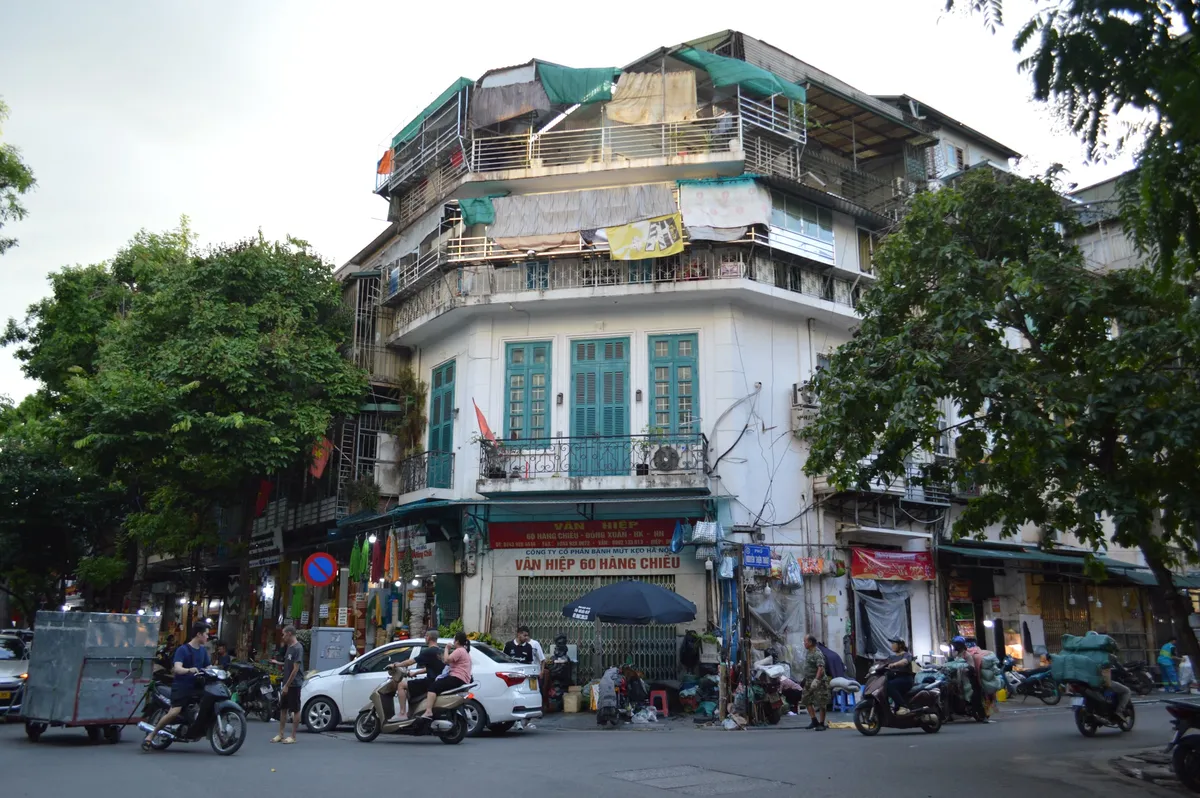
The real way to see Hanoi's Old Quarter is to get lost in it on purpose: 36 streets that once belonged to craft guilds, motorbikes streaming past from every direction, and egg coffee on practically every corner. Few Southeast Asian capitals let you eat this well and see this much while spending this little — street dishes run 25,000-90,000 VND ($1-3.60), and the best part of the city is just the walking itself.
Walking the guild streets
Hang Bac — Silver Street — is still lined with jewellery shops centuries after the silversmiths' guild first claimed it, and most of the Old Quarter's 36 streets still carry names tied to whatever trade originally worked there. Hoan Kiem Lake is the natural anchor: it closes to traffic on weekends and turns into Hanoi's best people-watching spot, red Húc Bridge and Ngọc Sơn Temple included. Skip the map for a stretch and wander the alleys instead — that's where the hidden pagodas and the corner cafés actually show up.
What's worth eating, and what it costs
Pho runs 50,000-90,000 VND. Egg coffee (cà phê trứng) — whipped egg yolk and condensed milk layered over strong coffee — traces back to one specific person: Nguyen Van Giang, who improvised the recipe in 1946 while bartending at the Sofitel Metropole during a milk shortage, then opened Cafe Giang, still run by his family today, according to Vietnam's official tourism board. It costs 30,000-50,000 VND. Bia hoi, the fresh draft beer sold on street corners, is the cheapest thing anywhere on the menu at 5,000-12,000 VND a glass (under $0.50) — Ta Hien corner is the classic spot to try it.
Spotting the tourist markup
Stalls deep in the most touristy stretch of the Old Quarter routinely charge 3-5 times local prices — a plain bowl of pho over 100,000 VND is a red flag. Snacks from pole-carry street vendors are sometimes days old; follow whichever stall has a line of locals instead.
Worth it on a tight budget?
Yes — Hanoi is one of the cheapest capitals in Southeast Asia for anyone who likes walking and eating. A full day of street meals, coffee, and a late-afternoon bia hoi lands around 150,000-250,000 VND ($6-10) per person, not counting a bed. The one thing worth booking ahead is a guided food tour — less for the taste, more for the historical context behind each dish.
Crossing the street in Hanoi (and surviving it)
The first time anyone tries to cross a street in the Old Quarter, the instinct is to freeze halfway across — which is exactly the wrong move. The technique locals and local guides recommend is simple in theory: walk at a steady, constant pace, never speeding up or stopping suddenly, while watching the motorbikes headed your way, because they're the ones adjusting around you, not the other way around. Never step backward mid-crossing — riders are already calculating a path based on you continuing forward, and a sudden reversal is what actually causes collisions. In a group, cross shoulder to shoulder in a single line rather than scattered, since that gives surrounding traffic a more predictable shape to flow around. And since Old Quarter sidewalks are often taken over by parked bikes or food stalls, it's normal — and safe, done carefully — to walk part of the route in the street itself, facing the oncoming traffic whenever possible.
Keep planning
Check out the full itinerary: Classic Southeast Asia: Bangkok, Chiang Mai and Hanoi on a Tight Budget
See also: How to save money on food while traveling: street food, markets, and cooking for yourself