Northern Lights in Iceland: Where and When to Shoot Without an Expensive Package
Produced with AI assistance. Reviewed by Equipe PaceRoam. · Updated October 27, 2026
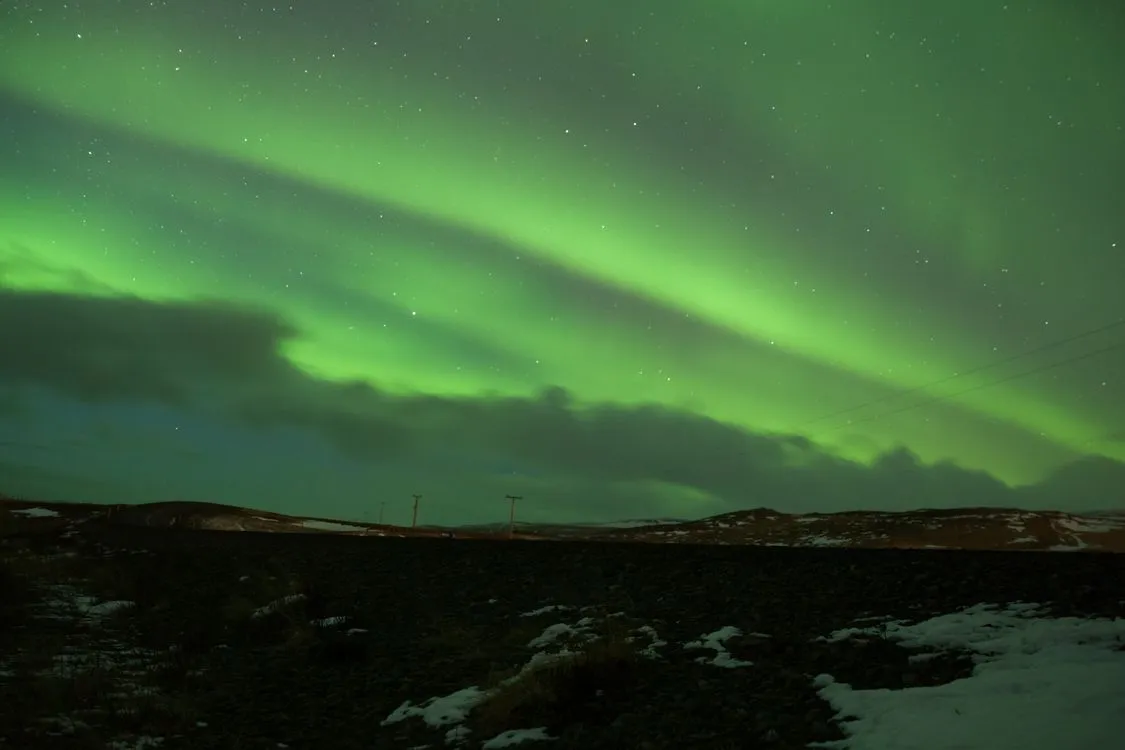
A group northern lights bus tour from Reykjavík starts around 9,000 ISK per person. That's a fair price, but it's not required: anyone with a rental car who's comfortable driving dark, occasionally icy roads at night can get the same result for free, paying only for the car they'd already have budgeted for. The figures below come from the Icelandic Meteorological Office (IMO), the country's official aurora forecast authority, and from specialist guides checked in 2026.
When to go: the right month, the right hour
Iceland's aurora season runs September to April, outside that window the midnight sun keeps the sky too bright. Within the season, September-October and February-March offer the best balance between already-long nights and comparatively stable weather; November through January have the longest nights of all, which widens the daily viewing window, but weather is less predictable then. Peak activity hours run 9pm to 2am, with many of the best displays close to midnight, but in October and November the aurora can start showing as early as 7:30-9pm, not long after dark.
Checking the official forecast before heading out
The Icelandic Met Office (IMO) publishes a daily cloud-cover map and the Kp index (a 0-9 scale) for midnight on the selected date at en.vedur.is/weather/forecasts/aurora. Cloud cover cancels out any high-activity forecast, the aurora sits 100 km up, but a cloud layer at just 1-10 km hides it completely. A Kp of 2-3 is often enough to see the aurora in Iceland; Kp 4 and above counts as a strong night.
Paid tour vs. your own car: what changes in price
Bus tours start around 9,000 ISK (roughly 65 USD in 2026); small-group minibus tours from about 12,000 ISK; boat tours from about 13,000 ISK; super jeep tours from about 26,000 ISK. Driving yourself costs nothing beyond the rental you've likely already budgeted, with the added benefit of being able to head back out at 11:30pm, after many tours have already wrapped and real activity often kicks in.
Where to shoot without straying far from Reykjavík
On a clear night with reasonable activity, the aurora is visible directly from Reykjavík, but city light pollution flattens the contrast in photos. Driving just 20 to 40 minutes out to the Reykjanes peninsula or Thingvellir National Park already cuts most of the artificial light and noticeably improves results, no multi-day road trip required.
What it costs to reach the viewing spots
Entry to Thingvellir National Park is free, and walking the Almannagjá rift costs nothing — the only charge is vehicle parking, which funds the lots and restrooms. For a car with up to five seats, the fee is 1,000 ISK for the day (roughly 7 USD in 2026), valid all day across the park's three official car parks (P1, P2 and P5). That's considerably cheaper than booking a paid tour just to reach the same viewpoint, and it gives you the freedom to wait out the sky without a fixed schedule.
One more practical point: a full moon washes out faint aurora the same way city lights do, so checking the lunar calendar alongside the Kp index and cloud forecast improves the odds of a strong photo. Planning around a new moon, within the September-to-April window, stacks the best conditions without costing anything extra. Checking lunar phase takes thirty seconds and costs nothing, yet it separates a washed-out, barely-visible green smear from a display sharp enough to anchor a long-exposure photo.
Is it worth a tight budget?
Yes, especially for anyone already renting a car for the trip. A couple with a rental car spends nothing extra on aurora hunting beyond that night's fuel (practically negligible) and skips the 18,000-24,000 ISK they'd otherwise pay for two basic tour tickets. For those without a car, the 9,000 ISK bus tour is still the cheapest option and usually includes a free second attempt if clouds roll in. Always check the day's forecast on the official IMO site before deciding to head out.