Roy's Peak on the cheap: Wanaka's most photographed hike without a guided tour
Produced with AI assistance. Reviewed by Equipe PaceRoam. · Updated November 7, 2026
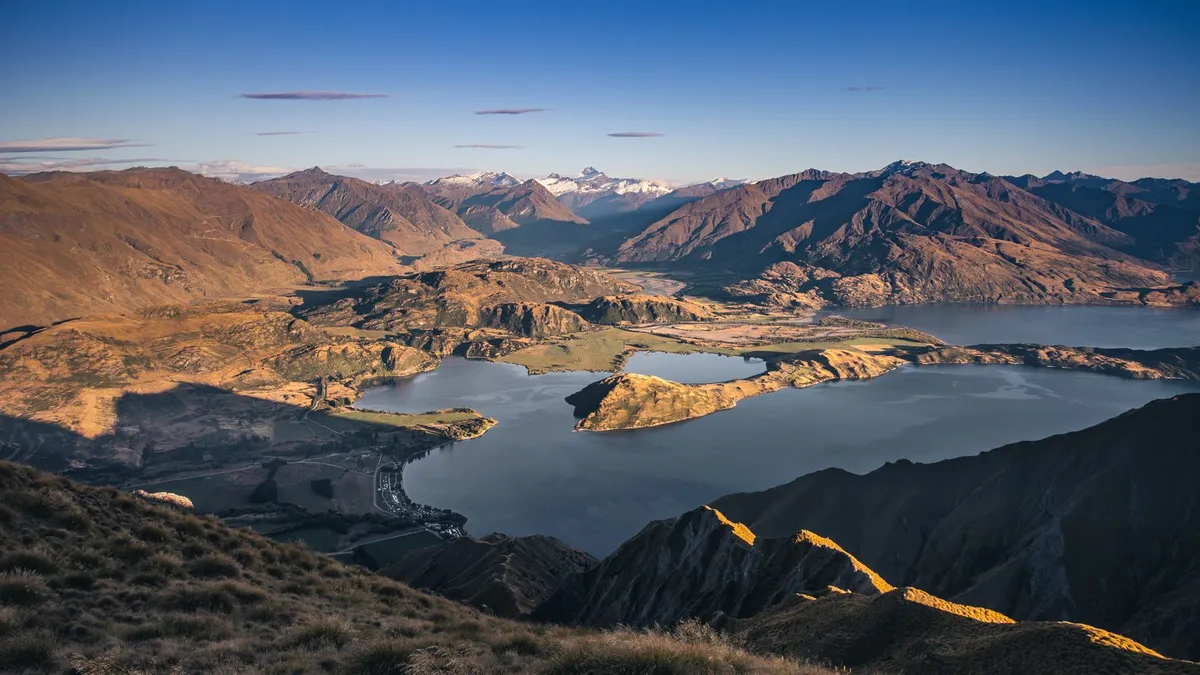
Roy's Peak, just outside Wanaka, New Zealand, is one of the most Instagrammed hikes in the country, famous for its sweeping view over Lake Wanaka. You don't need to book a guided tour to do it: it's a public track maintained by the Department of Conservation (DOC), and it starts at a free car park. Here's the distance, duration, and seasonal data pulled from the official source in 2026.
The real distance and time
According to DOC, the track is 16 km return via the same path, with an estimated 5-6 hours for the full round trip to the summit at 1,578 meters. Elevation gain exceeds 1,200 meters. Travelers short on time can turn around at the main viewpoint, roughly 7 km from the car park, which cuts the total distance to about 14 km — still a 3.5-4 hour round trip to that point alone.
What it actually costs to get there and hike
Parking at the trailhead is free for cars and campervans, as confirmed on the official Department of Conservation page for Roy's Peak Track. The track itself has no entry fee either — the lower section crosses private farmland, and some visitor accounts mention an optional donation box near the start, but it's not a mandatory DOC charge. There's no official shuttle between Wanaka town and the car park, so anyone without their own vehicle has to rely on a taxi, rideshare, or rental car.
Seasonal closure: when the track shuts down
Every year, from October 1 to November 10, the track closes entirely for the lambing season on the farmland it crosses — confirmed by both DOC and the official Wanaka tourism page. Anyone traveling in October needs to double-check the November 11 reopening before locking in an itinerary, since the exact reopening date can shift depending on farm conditions.
Practical logistics for going it alone
The car park fills up fast on weekends and during summer (December to March); hikers trying to beat the crowd or find a spot usually start before dawn. Beyond that, there's no paid infrastructure on the trail — no paid restrooms, no food stalls, no mandatory guide. The only real spending is transport to the car park and, optionally, gear (poles, proper hiking shoes) and food you bring yourself.
Worth it on a tight budget?
Compare that to guided tours sold by Wanaka operators for the same track, which typically run NZ$150-250 per person including transport and a guide. Doing Roy's Peak independently costs essentially zero for entry and parking, plus whatever it takes to get to the trailhead (a taxi from Wanaka town usually runs NZ$20-35 each way, or nothing if you have your own car). For a tight budget, it's one of the few major viewpoints in southern New Zealand that charges nothing for access — the real cost is time, around 5-6 hours of walking, and paying attention to the seasonal closure window.
Where to sleep in Wanaka without overspending
Hostel dorm beds in Wanaka start around NZ$22 a night at the cheapest options, averaging NZ$55-92 depending on season, according to comparison sites like Hostelz and Kayak. Private hostel rooms run NZ$62-120. Compared to a regular hotel in town (averaging over NZ$400 in peak season), staying in a hostel and hiking the track without a guide is the cheapest combination for seeing the viewpoint without blowing the budget for the rest of the trip.
Worth noting is a small informal cost mentioned in traveler accounts: the lower part of the route crosses private farmland, and some travel guides mention a donation box suggesting $2-3 per person along that stretch — it's not a DOC-imposed charge, but it's commonly found near the start. The drive from downtown Wanaka to the car park is about 6 km, taking roughly 8-10 minutes by car.
One more scheduling note: because there's no shuttle service from town, independent hikers who want the popular pre-dawn start need their own car or a pre-booked taxi reserved the night before — showing up at 2am without transport arranged in advance is the most common reason travelers miss the sunrise window at the summit.