Athens and Split: a Mediterranean and Balkans itinerary on a controlled budget
Updated November 13, 2026
Check a map and the idea writes itself: Athens and Split sit just 1h45 apart on a direct flight, with Aegean, Croatia Airlines, and Volotea covering the route almost daily. Leave the Acropolis after breakfast and you can be eating lunch steps from Diocletian's Palace that same afternoon, no layover required — and promo fares show up in the €17 to €70 range on flight comparison sites.
Splitting the week between the two
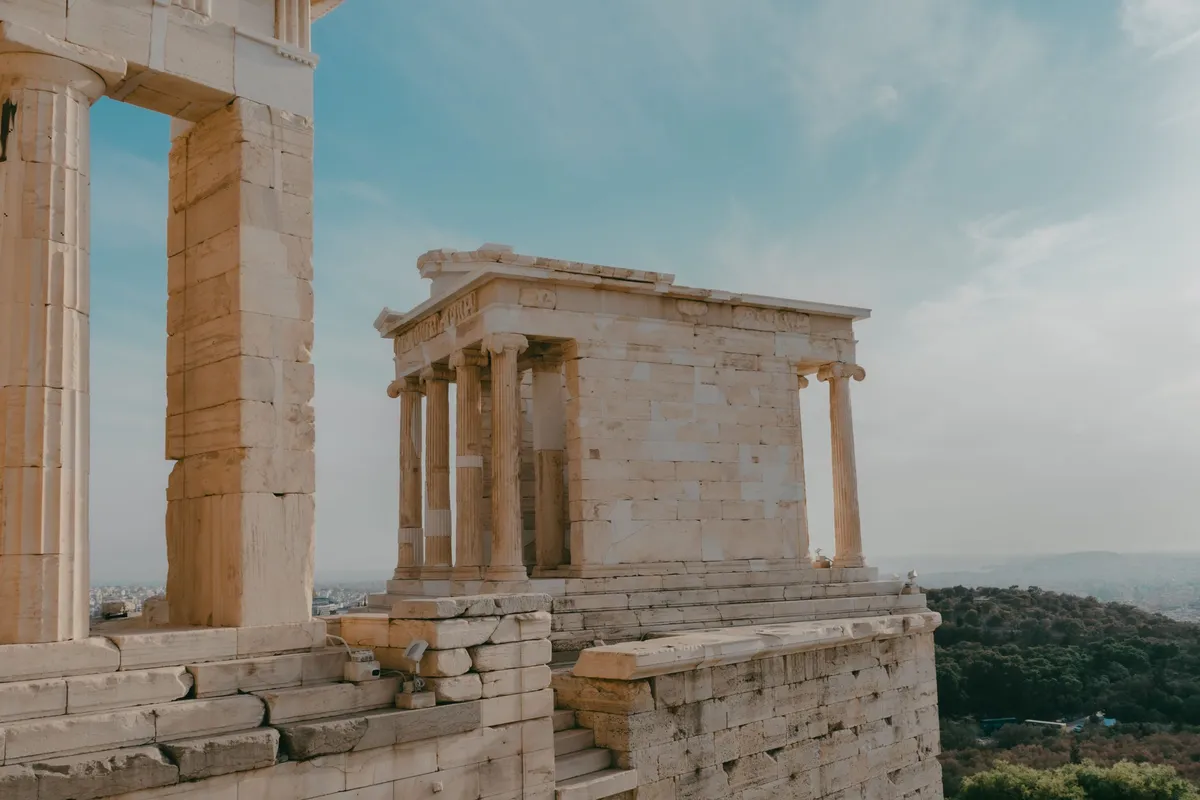
Start in Athens, which earns at least 2 to 3 days: the Acropolis and its museum fill one day, the Ancient Agora and Monastiraki the next, and a third day covers Plaka, Mount Lycabettus, and — time permitting — a side trip to the Temple of Poseidon at Cape Sounion. Split needs 3 to 4 days of its own: a full day for Diocletian's Palace and the old town, then ferry day trips to Hvar or Brač, or an excursion into Krka National Park. Add it up — roughly 3 days per city within a 6-to-7-day trip — and the pace never feels rushed.
Covering the gap between the cities
The direct ATH-SPU flight is the practical choice, averaging 1h45 in the air with departures scattered through the day (Croatia Airlines around 7:40am, Aegean closer to 9pm). Travelers chasing a cheaper option who don't mind sacrificing a full travel day can try bus-and-ferry combinations through Italy or along the Balkan coast, but that routinely runs 15 to 20 hours — worth it only if time matters less than money. Inside each city, Athens' metro handles nearly everything a visitor needs, while Split's compact old town is almost entirely walkable.
What the trip actually costs
Factor in simple lodging, local food, city transport, and one paid activity a day, and Athens runs about $60-70 per person daily on the hostel-budget plan. Split costs more: $90-130 a day mid-range, or $50-65 on the tighter dorm-and-market-food version. A full week — 3 to 4 days per city plus the flight between — lands the whole trip between $900 and $1,300 per person, not counting the international flight to Europe.
Timing it right
In Athens, show up right at opening — 8am year-round, per the official site's hours — to beat both the heat and the cruise-ship crowds that flood in after 10am. In Split, skip the seafront restaurants along the Riva; prices there run tourist-grade, while the good, cheap food sits three blocks inland. Spring (April to June) and fall (September to October) are the sweet spot for both cities — mild weather, lighter crowds than peak summer. Book the Athens-Split flight 3 to 4 weeks ahead and the fare difference tends to be noticeable.
Two things to sort out before you land
Book the Acropolis slot before anything else: entry requires a timed-entry reservation through the official hhticket.gr portal, and showing up without one means joining a walk-up line that routinely runs over an hour in summer; the earliest 8am slots sell out fastest because they're also the coolest and least crowded. On the Split side, most private accommodation bills a separate municipal tourist tax (boravišna pristojba) of around €2 per person per night — children under 12 are exempt and those 12 to 18 pay half, so check the final total before assuming the quoted room rate covers everything.
One more cost worth factoring in: Croatia's municipal tourist tax applies on top of the room rate almost everywhere in Split, typically billed separately at checkout rather than folded into the booking price shown online, and it's collected per person per night rather than per room, so groups should budget for it line by line.