Hooker Valley Track: New Zealand's Easiest Walk to the Foot of Aoraki/Mt Cook
Produced with AI assistance. Reviewed by Equipe PaceRoam. · Updated October 27, 2026
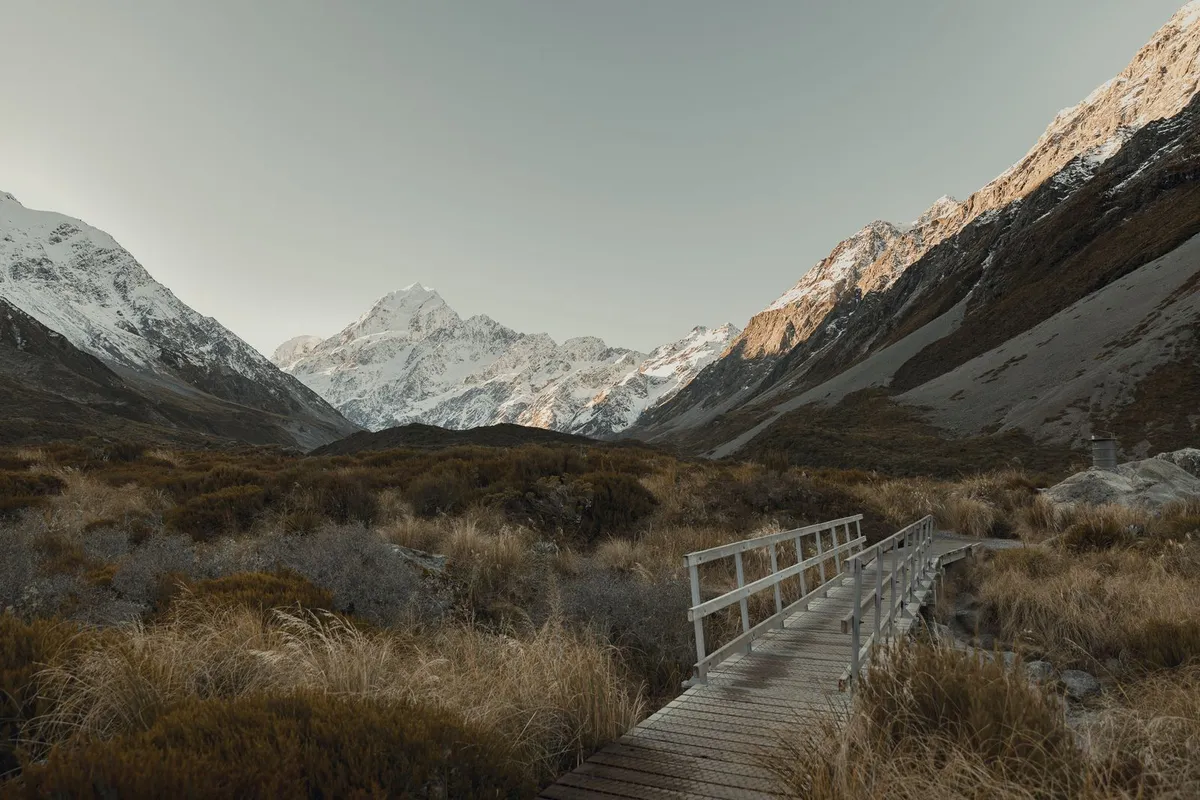
If you want one New Zealand hike that costs almost nothing and still delivers glacier views, it's the Hooker Valley Track in Aoraki/Mount Cook National Park. No entry fee, no booking, and it ends at a lake with ice floating under the country's highest peak. Here's what the trip actually costs and takes, based on 2026 figures from the Department of Conservation (DOC). The figures come straight from the official New Zealand Department of Conservation page.
How long and how far
It's 10 km round trip on an out-and-back path, with barely any elevation gain — about 124 m total. DOC breaks it into three legs: White Horse Hill car park to the first swing bridge is 1 km / 15 minutes; first to second bridge adds 1.5 km / 30 minutes; second bridge to Hooker Lake is another 2.5 km / 45 minutes. That's roughly 1.5 hours one-way, and about 3 hours round trip once you stop for photos. The second bridge reopened in July 2026 after a rebuild — at 189 metres, it's now the longest suspension bridge in the country.
What it actually costs
The track itself is free — no ticket, no reservation, no mandatory guide. The only line item is parking at White Horse Hill, which DOC charges at NZ$2.50 per half hour or NZ$25 for a full day; stays under 20 minutes are free. Park overnight and leave the next morning and you're billed for two days (NZ$50 total). If you're already staying in Mount Cook Village and walk or bike in, the cost drops to zero.
When to go
DOC's own warning is blunt: Aoraki/Mount Cook weather changes fast, with strong wind, heavy rain, snow and sharp temperature drops possible in any month. Winter (June–August) brings icy, slippery sections, and DOC specifically recommends microspikes and trekking poles for that period. November through March is usually dry underfoot and ice-free, the easier window if you're going without gear. Whatever the season, pack a rain shell — a clear morning in the village can turn windy on the valley floor within half an hour.
What's included for free
The Kakīroa/Mount Sefton viewpoint sits right on the main path, no detour or extra charge needed. The Aoraki/Mount Cook Visitor Centre in the village has free exhibits on the region's geology and climbing history and is worth a stop to check trail conditions before you set off. All three swing bridges cross for free too — just keep your hands free, since they sway in the wind.
Where to sleep and eat without blowing the budget
Mount Cook Village itself is tiny and pricey for standard lodging. The cheaper move is a day trip from Twizel (about 1 hour away by car) or Lake Tekapo (about 1 hour 40 minutes), both with hostel beds well below anything inside the park. That approach also avoids the second day of parking fees, since you drive in, walk, and drive out the same day for a single NZ$25 charge — or less if you're only there a few hours.
Is it worth the trip?
Yes — it's the best cost-to-scenery ratio of any walk in the Mount Cook area. Counting only parking (NZ$25) and a day trip from Twizel, the whole outing runs under NZ$30 per person, fuel split among the car aside. Compare that to helicopter or boat trips to nearby glaciers in the same region, which run into the hundreds of New Zealand dollars, and the Hooker Valley Track delivers ice floating at the foot of Aoraki for a fraction of the price, in about three easy hours on foot.
One more practical note: cell coverage inside the valley is patchy, so download an offline map of the park before leaving town, and carry a paper backup if you're hiking outside the busy midday window.
Budget travelers who skip a car entirely can reach Twizel by InterCity bus from Christchurch and then arrange a shuttle transfer to the White Horse Hill car park on hike day, a route that avoids both a rental car and the daily parking fee calculation entirely, though it does add a transfer cost that varies by operator and season.