Cheap Southern Cone Itinerary: Buenos Aires, Montevideo and Santiago
Updated November 7, 2026
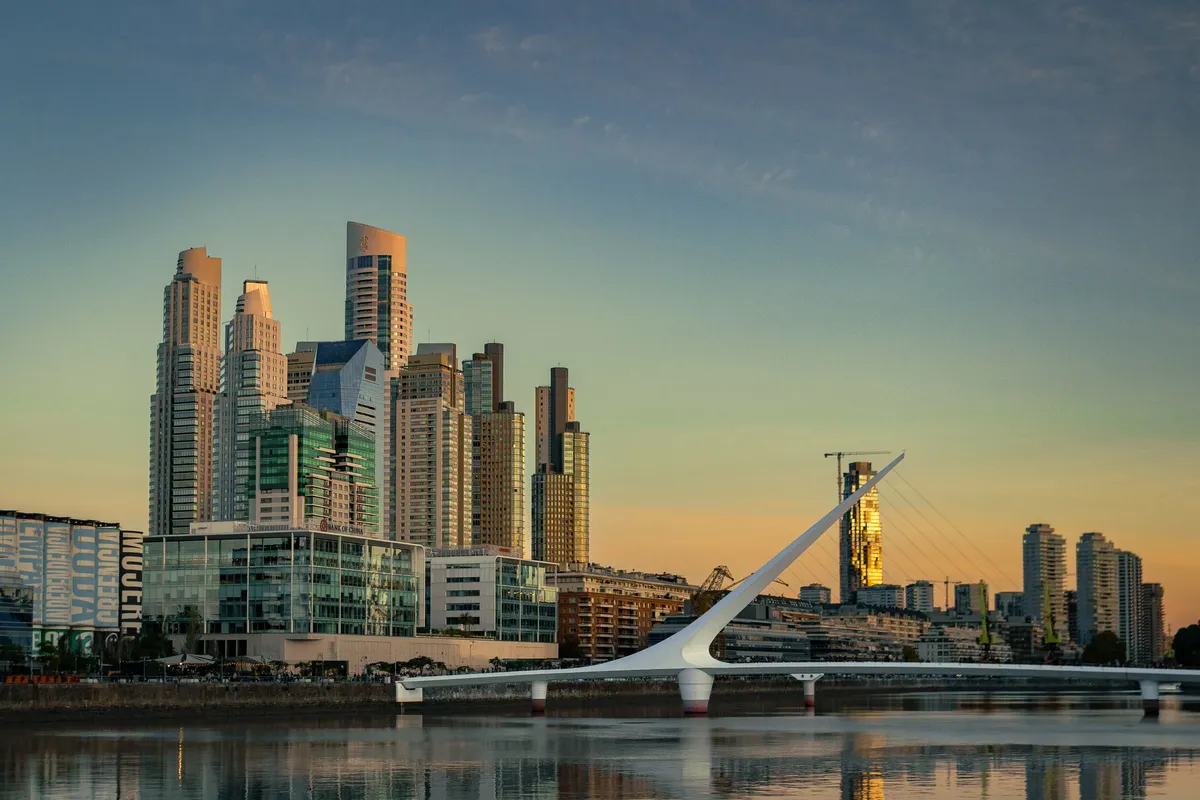
Three countries, one Rio de la Plata crossing, and a direct flight over the Andes: that's the shape of the classic Southern Cone loop — Buenos Aires, Montevideo, and Santiago — and it's one of the cheapest multi-country routes a traveler can build from scratch.
Sequencing: don't zig-zag
Run it Buenos Aires → Montevideo → Santiago, or the reverse — anything else means doubling back. For 10 days, a workable split is 4 days in Buenos Aires (it's big, with very different neighborhoods worth slowing down for), 3 in Montevideo (smaller, calmer), and 3 in Santiago, with room for a Valparaíso day trip if time allows. Argentina-focused guides often suggest 7 to 10 days for Buenos Aires and its surroundings alone, so travelers prioritizing that city should stretch those days and trim Montevideo instead.
Getting between the three cities
The Buenos Aires–Montevideo leg is a Rio de la Plata crossing, not a flight: Buquebus effectively has the direct route to itself, and independent ferry-route comparisons confirm its fastest direct sailing runs about 2h45min, with fares from US$50–75 depending on how early you book and which departure you pick. A slower combined bus-plus-ferry option via Colonia del Sacramento — 4h30min to 5h, run by both Buquebus and Colonia Express — usually costs less. There's no practical overland link onward to Santiago: that leg is a direct flight of roughly 2h29min to 3h30min covering about 1,339 km, a window Sky Airline's own route page confirms, with promotional fares from about US$140-160 when booked ahead on Latam, Sky Airline, or JetSMART.
What the whole loop costs
Buenos Aires runs US$15-22/day on a budget profile (simple meals, hostel, public transit), climbing to US$30-50/day for a mid-range one; backpacker reports on this exact Uruguay-Argentina-Chile route put shared-room lodging at around US$15/day per person. Montevideo tends to run slightly pricier on food and transit, since the Uruguayan peso exchange is less favorable. Stack 10 days at a budget-to-mid-range mix — lodging, food, local transit in all three cities, the ferry, and the flight — and the total lands between US$820 and US$1,270 per person, not counting the international flight into Buenos Aires or Santiago, or travel insurance.
Four practical notes before you book
Always price Buquebus against Colonia Express before buying the Buenos Aires–Montevideo crossing — the gap can be wide, especially on the Colonia combined option. In Buenos Aires, the SUBE card beats taxis or rideshares by a wide margin for public transit. Budget more for eating out once you're in Uruguay, since it runs pricier than Argentina. And for the Montevideo–Santiago leg, compare Latam, Sky Airline, and JetSMART well ahead of time — fares swing hard with Southern Hemisphere summer (December to February), the route's high season.
What travelers who've done this exact loop report
Threads from people who've actually completed the Buenos Aires-Montevideo-Santiago combination, including on forums like Reddit's r/travel, converge on two points worth planning around. First, Montevideo is frequently described as worth only a day and a night rather than a multi-day stop — travelers who gave it two full days often say they could have spent that extra time in Buenos Aires instead, since the city and nearby Colonia del Sacramento cover most of what's worth seeing in under 24 hours. Second, Chile runs noticeably more expensive once you're on the ground: several travelers who did this exact three-country combination report that a comparable meal in Santiago costs close to double what the same dish costs in Buenos Aires, so it's worth shifting more of the food budget toward the Chilean leg. If you want more out of Santiago without renting a car, multiple traveler accounts point out that the metro runs directly out to wine country — Cousiño Macul and Concha y Toro are both reachable by subway plus a short taxi or transfer, which makes for an affordable half-day vineyard visit instead of a full guided tour. One stop that keeps coming up across several independent traveler accounts as a highlight of the whole loop is the Museum of Memory and Human Rights in Santiago, which documents the Pinochet-era dictatorship; admission is free, and more than one visitor has called it one of the most moving parts of the entire trip.